The Sound of Waiting
Modern workplaces are experts at waiting. We hold meetings, make subcommittees, circulate drafts, and call it progress. Higher education institutions seem to have elevated this to an art form.
I write from the middle of it, not as an academic observer or tech evangelist, but as someone working inside the system, trying to make it breathe. My work lives in that messy overlap between technology, learning, and change management, where progress is slow, people are complex, and clarity has to be earned. Navigating the In-Between is a three-part series of field notes from that space. It’s part reflection, part experiment: written by someone still learning how to move without waiting for permission.
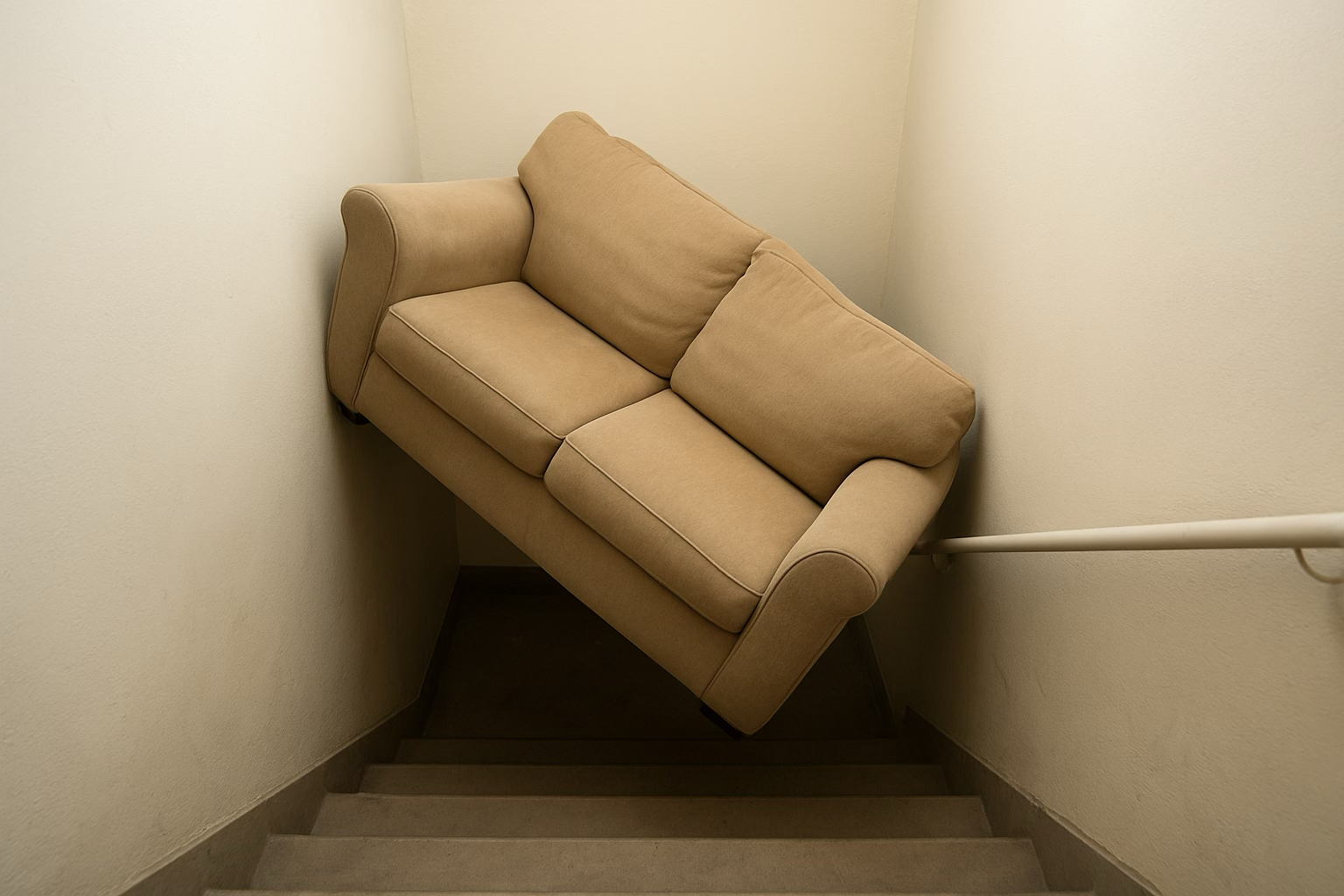
Mostly, we’re parked in that uneasy pause before change, the liminal middle, where we know the old way is cooked but can’t yet picture the new one. It’s awkward, overly polite, and weirdly comfortable. Fear here wears a name tag and a lanyard.
If you’ve ever worked in a place that loves meetings more than motion, you already know the feeling. You can hear it in the halls: fluorescent hum, a copier grinding somewhere, the slow shuffle of optimism colliding with process. Everyone knows a shift is coming, but no one wants to be first through the door. The place isn’t resisting change. It’s just holding its breath.
The Waiting Room of Agency
Liminal space isn’t a hallway. It’s the waiting room of agency. Not quite unlike the Afterlife Waiting Room in Beetlejuice. The door’s open, but we hover, unsure who’s allowed to cross. Fear says we’ll lose something important. Habit says keep the chairs lined up and nod politely. The air smells of stale coffee and risk avoidance.
More often than not, hesitation masquerades as prudence. We label it “consultation,” send out a survey, and call it leadership. Then we wait for an edict that never comes. Clarity doesn’t send memos. It shows up when someone finally stops waiting.
The Social Anatomy of Transition
Every academic department and managers meeting has its own ecosystem of movers and stayers. Early adopters sprint ahead. Laggards dig in. The silent majority stands there, waiting to see who survives. It’s the worst Hunger Games ever. The early adopters see possibility. The laggards see danger. The middle sees another meeting invite.
Now picture a workshop where everyone agrees something has to change, then immediately schedules another session to “process next steps.” It’s almost elegant, this choreography of apprehension. Each person stands at a different doorway, peeking into a slightly different future. Change isn’t an event. It’s a slow migration, sometimes sideways. And underneath it all is the quiet hum of systems built to minimize risk with policies, approvals, and accountability loops.
When Change Gets Engineered Instead of Imagined
We like to think transformation can be managed into existence. Draft a timeline, a charter, a dashboard. Prove we’re serious. But real change rarely sticks to a spreadsheet. It begins as imagination. Maybe it’s a fever dream napkin sketch, a hallway conversation, or a rogue prototype someone forgot to shut down.
The moment we confuse process with progress, the whole thing seizes up again. We measure motion without movement. Everyone complies, nothing breathes. But once in a while, imagination and structure line up. A small pilot becomes a shared prototype. The system stirs. The irony? The best ideas usually sneak in through the side door while the rest of us are still arguing about governance frameworks.
The Quiet Step Forward
Sometimes change starts because one person stops whispering. A faculty member tries something unapproved. A tech rewires a tool before the policy catches up. A dean shrugs and says, “What if we just start small?” These tiny acts of rebellion break the seal. Suddenly the silence has texture again.
Agency doesn’t show up with fanfare. It slips in as a decision made quietly, maybe even reluctantly. Somewhere in the background, the fluorescent hum changes pitch. Light hits the wall differently. Fear turns from a stop sign into a compass.
Hope as Relief
Then the air shifts. People look up. Meetings sound less like bad-sitcom table reads. The place exhales. Hope doesn’t storm in. It arrives like pressure leaving a room.
Transformation isn’t done to us or for us. It happens through us. It’s when imagination and action finally shake hands. The sound of progress is subtle: air moving again, chairs scraping back, someone finally standing up.
Change doesn’t start with alignment.
It starts with movement. Alignment catches up.
The Threshold Journal
Before your next change, pause. Don’t sprint for the exit.
Ask yourself:
- What am I afraid of losing?
- What might I gain if I walk through?
- Who do I become on the other side?
Write it down somewhere you’ll see later. Don’t edit it. Let the ink keep your hesitation. When you’ve crossed the threshold, read it again. Notice what stayed true and what turned out lighter than you feared.
Change begins when reflection turns into decision.
From Choice to Circulation
One person’s choice can change the temperature of a room. But real transformation starts when those small decisions sync up. The hallway of closed doors becomes a network of open ones. Air flows. Light spreads. Energy circulates. That’s when the organization stops waiting for direction and starts learning to move.
Next: Thinking Like an Ecosystem, about how friction becomes flow, and connection becomes the medium of change.